The Heart & Spirit of Tribal Consultation

Client

Oregon Department of Education, Oregon Legislative Commission on Indian Services

My Roles

Script writing, storyboarding, videography

Context

In 2001, Oregon was among the first states to require state agencies to consult with the nine federally recognized Tribal Nations in Oregon as equal partners in planning. Many agency leaders have since sought guidance on engaging in meaningful consultation.

To support this, Region 16 collaborated with the Oregon Department of Education (ODE) and the Oregon's Legislative Commission on Indian Services (LCIS) to create a series of videos explaining Tribal consultation and its connection to Indigenous sovereignty from each Tribe’s perspective.

This project culminated with the development of an introductory video featuring Oregon state leaders, such as Governor Tina Kotek, underscoring the five main themes that Oregon Tribes discussed concerning the importance of Tribal consultation. This series is now mandatory viewing for all new ODE employees, and state agencies partnering with Tribes can now view individual videos from each respective Tribe.

Deliverables

I crafted a script for Governor Kotek, LCIS Director Patrick Flannigan, State Representative Tawna Sanchez, and Tribal Affairs Director of the Oregon Health Authority Julie Johnson, introducing the video series and outlining its main themes. I also filmed each state leader speaking their parts around Oregon's capital in Salem.

I began by analyzing each interview from the nine federally recognized Tribes in Oregon, identifying five emerging themes:

  1. Tribal sovereignty respects Tribes as autonomous, self-governing Nations.
  2. Tribal consultation honors Tribal sovereignty through government-to-government collaborations between state and Tribal leaders as equal and ongoing contributors.
  3. Tribal consultation is the law under both state and federal requirements.
  4. Each Tribe is unique and must be approached independently from others; one Tribe cannot speak for another.
  5. Tribes as traditional, ecological knowledge bearers steward their ancestral lands for the benefit of everyone, Native and non-Native residents alike.

From these themes, I created a script for the four state government leaders that underscores the importance of these themes. I also pulled quotes from each Tribe's individual video to further illustrate each theme from various Tribes' perspectives.

I handled all videography for the four state leaders, managing the lighting, sound, and filming for each of their segments. I also filmed some of the b-roll from around the capitol.

*Note: Interviews with Tribal leaders and video editing performed by Kauffman and Associates, Inc.

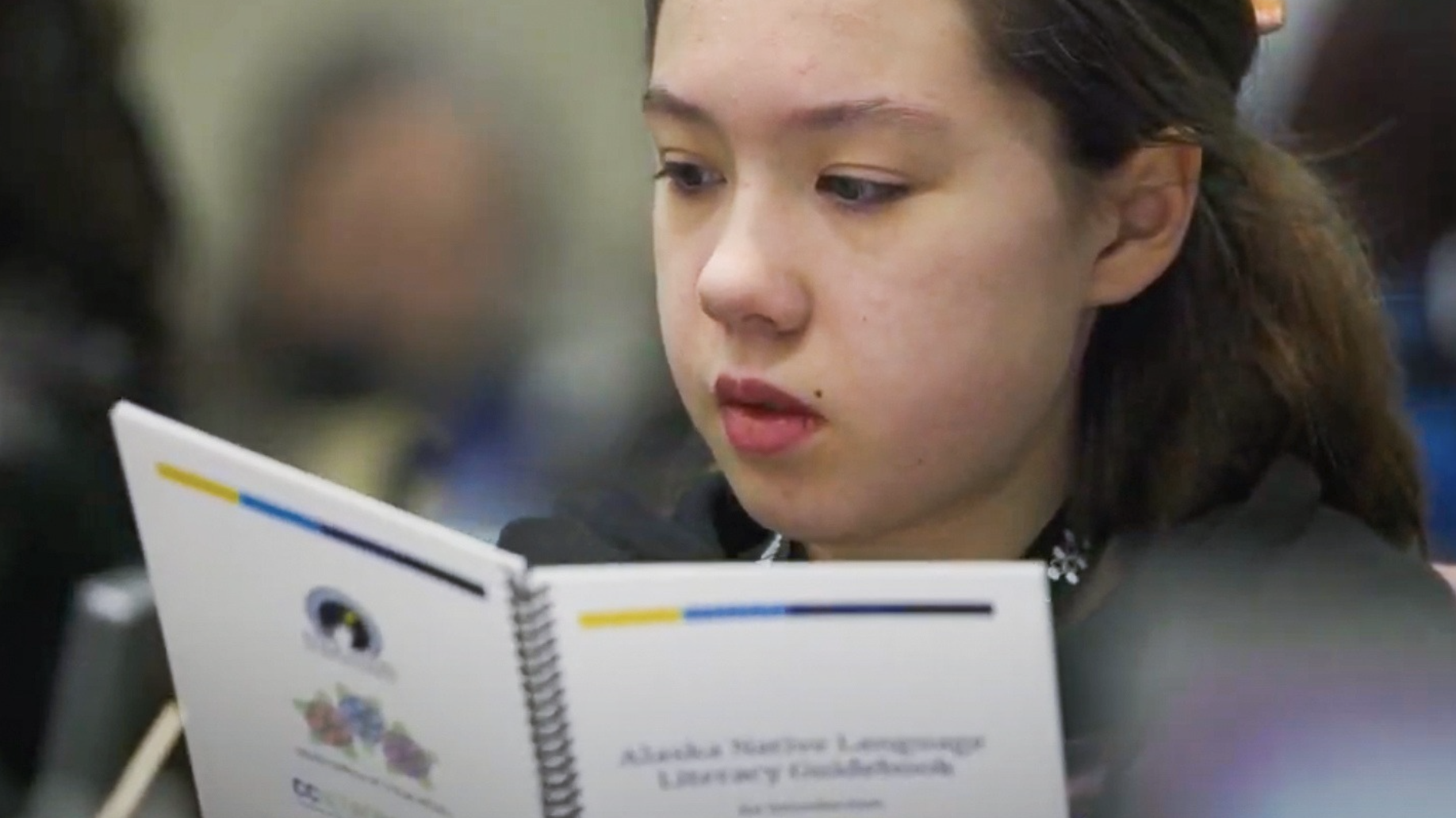
Alaska Native Language Literacy Guidebook

Context

As Alaska invested in improving historically low literacy outcomes, state leaders recognized a major gap: while schools relied on English-centered reading instruction, many students spoke Alaska Native languages at home.

The Department needed a public-facing publication to introduce a new initiative exploring how the Science of Reading could support Alaska Native language literacy. The Department had prepared a multi-author draft, but it required substantial editorial, citational, and visual refinement before release. I helped shape it into a credible, cohesive publication for the Alaska Native Language Summit.

Strategy

  • Reframe the draft around the publication’s core purpose: introduce, invite, and build trust.
  • Unify voice and tone across internal staff and external contributors.
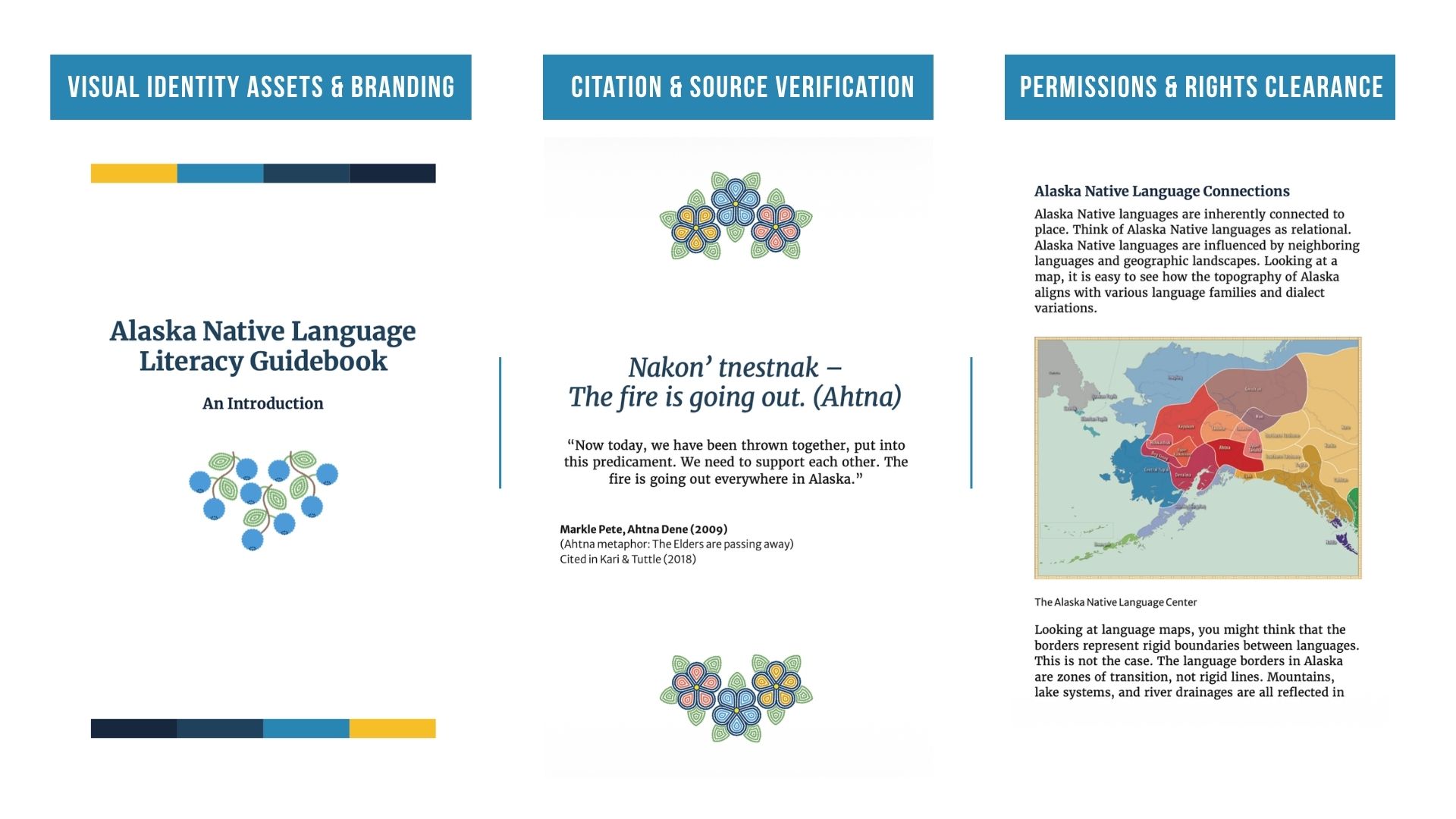
  • Strengthen credibility through source review, citation checks, and factual vetting.
  • Reduce reputational risk by addressing copyright and fair-use concerns.
  • Guide quality control across content and designed drafts.

Tactics

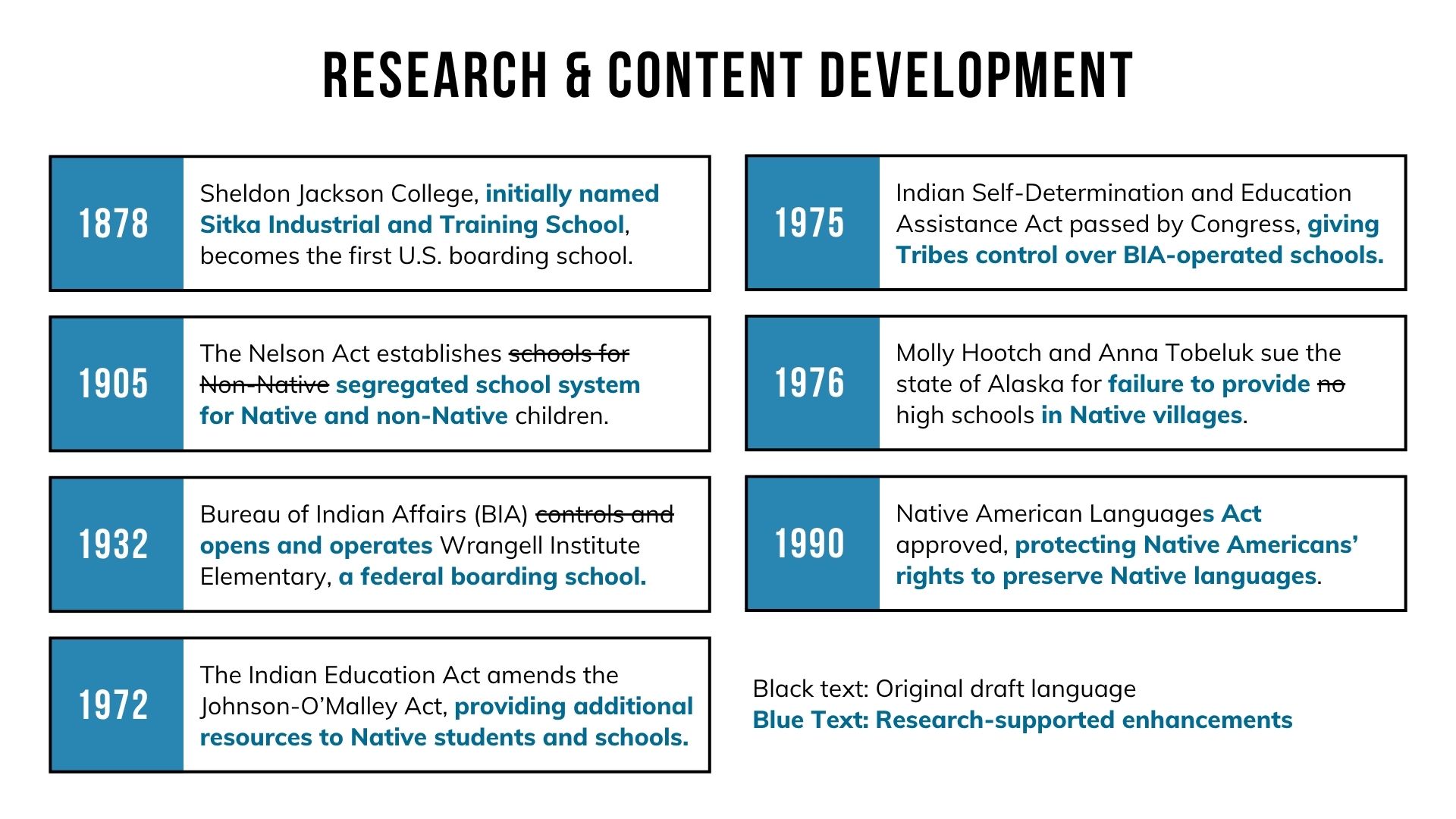
  • Perform deep structural refinement and line editing throughout the manuscript.
  • Rewrite dense, unclear, or uneven sections for clarity and flow for a diverse audience of educators, leaders, and communities.
  • Reframe weak or unsupported claims to align with available evidence and sourcing.
  • Replace or resolve unlicensed imagery through permissions, archives, or redesign.
  • Review layout drafts for visual and narrative flow, brand alignment, and print-ready quality.

outcome

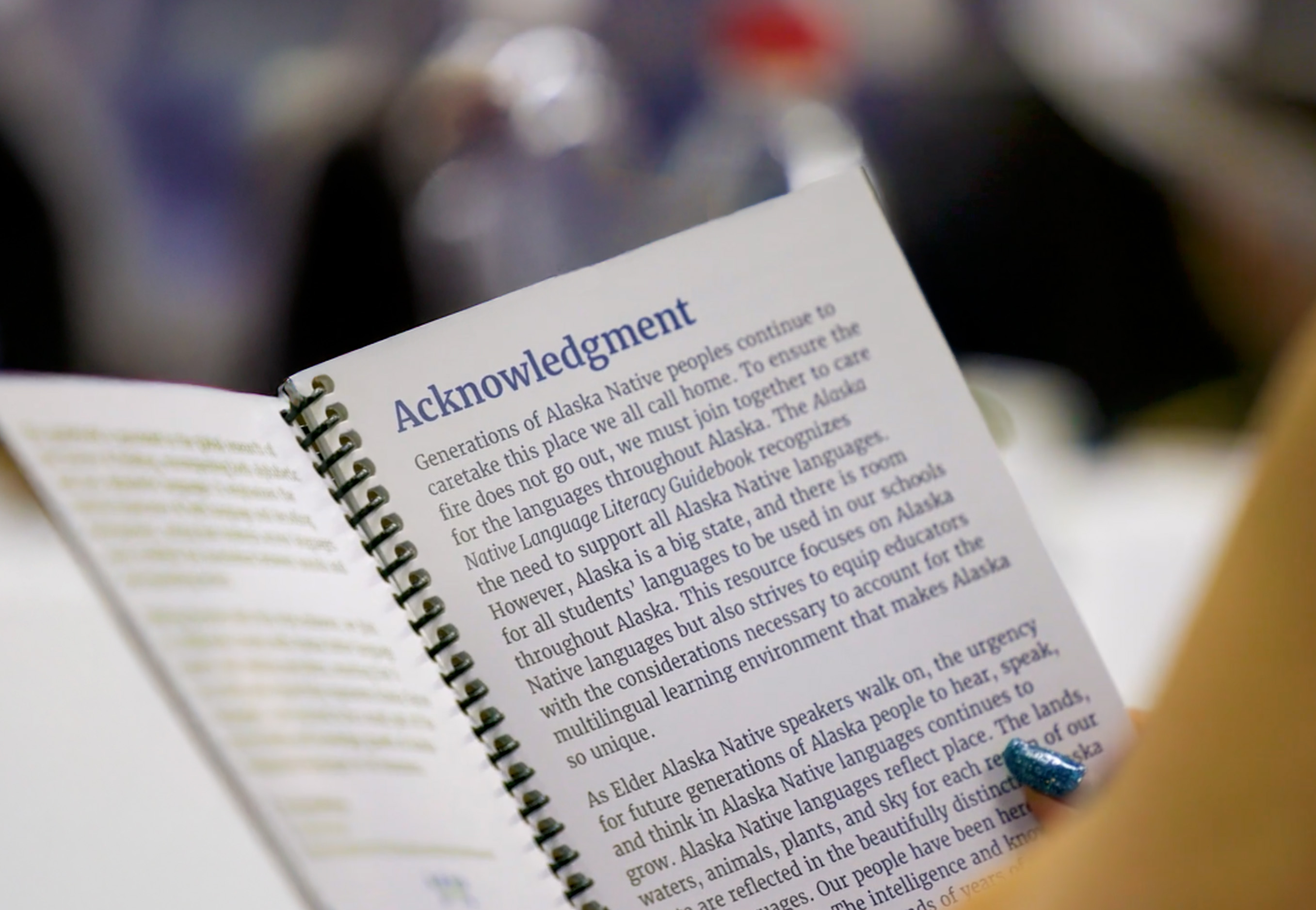
The final publication successfully introduced a first-of-its-kind literacy initiative connecting evidence-based reading instruction with Alaska Native languages.

A collaborator wrote: “Kate took [the Guidebook] so much further. She created a beautiful, cohesive narrative that honors the historical trauma and experiences of Alaska Native peoples.”

A participant shared: “The guidebook brought me to tears. It’s beautiful, inspiring, and it also challenged me.”


Heart & Spirit of Tribal Consultation

Client

Oregon Department of Education, Oregon Legislative Commission on Indian Services

My Roles

Script writing, storyboarding, videography

Context

In 2001, Oregon was among the first states to require state agencies to consult with the nine federally recognized Tribal Nations in Oregon as equal partners in planning. Many agency leaders have since sought guidance on engaging in meaningful consultation.

To support this, Region 16 collaborated with the Oregon Department of Education (ODE) and the Oregon's Legislative Commission on Indian Services (LCIS) to create a series of videos explaining Tribal consultation and its connection to Indigenous sovereignty from each Tribe’s perspective.

This project culminated with the development of an introductory video featuring Oregon state leaders, such as Governor Tina Kotek, underscoring the five main themes that Oregon Tribes discussed concerning the importance of Tribal consultation. This series is now mandatory viewing for all new ODE employees, and state agencies partnering with Tribes can now view individual videos from each respective Tribe.

Deliverables

I crafted a script for Governor Kotek, LCIS Director Patrick Flannigan, State Representative Tawna Sanchez, and Tribal Affairs Director of the Oregon Health Authority Julie Johnson, introducing the video series and outlining its main themes. I also filmed each state leader speaking their parts around Oregon's capital in Salem.

I began by analyzing each interview from the nine federally recognized Tribes in Oregon, identifying five emerging themes:

  1. Tribal sovereignty respects Tribes as autonomous, self-governing Nations.
  2. Tribal consultation honors Tribal sovereignty through government-to-government collaborations between state and Tribal leaders as equal and ongoing contributors.
  3. Tribal consultation is the law under both state and federal requirements.
  4. Each Tribe is unique and must be approached independently from others; one Tribe cannot speak for another.
  5. Tribes as traditional, ecological knowledge bearers steward their ancestral lands for the benefit of everyone, Native and non-Native residents alike.

From these themes, I created a script for the four state government leaders that underscores the importance of these themes. I also pulled quotes from each Tribe's individual video to further illustrate each theme from various Tribes' perspectives.

I handled all videography for the four state leaders, managing the lighting, sound, and filming for each of their segments. I also filmed some of the b-roll from around the capitol.

*Note: Interviews with Tribal leaders and video editing performed by Kauffman and Associates, Inc.

Heart & Spirit of Tribal Consultation

Client

Oregon Department of Education, Oregon Legislative Commission on Indian Services

My Roles

Script writing, storyboarding, videography

Context

In 2001, Oregon was among the first states to require state agencies to consult with the nine federally recognized Tribal Nations in Oregon as equal partners in planning. Many agency leaders have since sought guidance on engaging in meaningful consultation.

To support this, Region 16 collaborated with the Oregon Department of Education (ODE) and the Oregon's Legislative Commission on Indian Services (LCIS) to create a series of videos explaining Tribal consultation and its connection to Indigenous sovereignty from each Tribe’s perspective.

This project culminated with the development of an introductory video featuring Oregon state leaders, such as Governor Tina Kotek, underscoring the five main themes that Oregon Tribes discussed concerning the importance of Tribal consultation. This series is now mandatory viewing for all new ODE employees, and state agencies partnering with Tribes can now view individual videos from each respective Tribe.

Deliverables

I crafted a script for Governor Kotek, LCIS Director Patrick Flannigan, State Representative Tawna Sanchez, and Tribal Affairs Director of the Oregon Health Authority Julie Johnson, introducing the video series and outlining its main themes. I also filmed each state leader speaking their parts around Oregon's capital in Salem.

I began by analyzing each interview from the nine federally recognized Tribes in Oregon, identifying five emerging themes:

  1. Tribal sovereignty respects Tribes as autonomous, self-governing Nations.
  2. Tribal consultation honors Tribal sovereignty through government-to-government collaborations between state and Tribal leaders as equal and ongoing contributors.
  3. Tribal consultation is the law under both state and federal requirements.
  4. Each Tribe is unique and must be approached independently from others; one Tribe cannot speak for another.
  5. Tribes as traditional, ecological knowledge bearers steward their ancestral lands for the benefit of everyone, Native and non-Native residents alike.

From these themes, I created a script for the four state government leaders that underscores the importance of these themes. I also pulled quotes from each Tribe's individual video to further illustrate each theme from various Tribes' perspectives.

I handled all videography for the four state leaders, managing the lighting, sound, and filming for each of their segments. I also filmed some of the b-roll from around the capitol.

*Note: Interviews with Tribal leaders and video editing performed by Kauffman and Associates, Inc.

Tribal consultation video

Client

Oregon Department of Education, Oregon Legislative Commission on Indian Services

My Roles

Script writing, storyboarding, videography

Context

In 2001, Oregon was among the first states to require state agencies to consult with the nine federally recognized Tribal Nations in Oregon as equal partners in planning. Many agency leaders have since sought guidance on engaging in meaningful consultation.

To support this, Region 16 collaborated with the Oregon Department of Education (ODE) and the Oregon's Legislative Commission on Indian Services (LCIS) to create a series of videos explaining Tribal consultation and its connection to Indigenous sovereignty from each Tribe’s perspective.

This project culminated with the development of an introductory video featuring Oregon state leaders, such as Governor Tina Kotek, underscoring the five main themes that Oregon Tribes discussed concerning the importance of Tribal consultation. This series is now mandatory viewing for all new ODE employees, and state agencies partnering with Tribes can now view individual videos from each respective Tribe.

Deliverables

I crafted a script for Governor Kotek, LCIS Director Patrick Flannigan, State Representative Tawna Sanchez, and Tribal Affairs Director of the Oregon Health Authority Julie Johnson, introducing the video series and outlining its main themes. I also filmed each state leader speaking their parts around Oregon's capital in Salem.

I began by analyzing each interview from the nine federally recognized Tribes in Oregon, identifying five emerging themes:

  1. Tribal sovereignty respects Tribes as autonomous, self-governing Nations.
  2. Tribal consultation honors Tribal sovereignty through government-to-government collaborations between state and Tribal leaders as equal and ongoing contributors.
  3. Tribal consultation is the law under both state and federal requirements.
  4. Each Tribe is unique and must be approached independently from others; one Tribe cannot speak for another.
  5. Tribes as traditional, ecological knowledge bearers steward their ancestral lands for the benefit of everyone, Native and non-Native residents alike.

From these themes, I created a script for the four state government leaders that underscores the importance of these themes. I also pulled quotes from each Tribe's individual video to further illustrate each theme from various Tribes' perspectives.

I handled all videography for the four state leaders, managing the lighting, sound, and filming for each of their segments. I also filmed some of the b-roll from around the capitol.

*Note: Interviews with Tribal leaders and video editing performed by Kauffman and Associates, Inc.